
Sunspots or PIH? Understanding Your Dark Spots

Dark spots and uneven pigmentation are common skin concerns, but not every brown mark on the skin is the same.
What we often simply call a “sunspot” may actually be post-inflammatory hyperpigmentation (PIH) — pigmentation that develops after the skin has experienced inflammation or irritation.
Dermatologists Dr. med. Christine Schrammek-Drusio and Christina Drusio
explain the difference and why the right skincare, daily sun protection and patience are so important when caring for pigmentation-prone skin.
Sunspots vs PIH – What's the Difference?
Sunspots
Sunspots develop primarily as a result of long-term UV exposure.
They usually appear as clearly defined light to dark brown spots and are most commonly found on areas that receive the most sun exposure, including the face, décolleté and backs of the hands.
They tend to become more common with age and accumulated sun exposure and are often particularly noticeable in lighter skin tones.
Post-Inflammatory Hyperpigmentation (PIH)
PIH develops for a different reason.
It occurs after the skin has experienced inflammation or injury and can appear following:
acne or breakouts
eczema
burns
intensive peeling
laser or IPL treatments
picking or manipulating the skin
The dark mark often appears in the same area where the inflammation originally occurred.
PIH can affect all skin tones, although it can be more pronounced and persistent in more highly pigmented skin.
Can You Treat All Pigmentation the Same Way?
Not necessarily.
One of the biggest mistakes with pigmentation is trying to treat it too aggressively.
When dark spots appear, it's tempting to add stronger acids, exfoliate more frequently or combine several powerful active ingredients at once. But excessive irritation can create further inflammation — potentially making PIH more difficult to manage.
Modern pigmentation skincare is increasingly moving towards a gentler, skin-barrier-friendly approach, rather than simply using the strongest possible treatment.
Skincare Ingredients to Look For
Several cosmetic ingredients are well established in skincare for uneven pigmentation.
These include:
Niacinamide – supports a more even-looking complexion while helping maintain the skin barrier.
Vitamin C – provides antioxidant support and can help promote brighter, more even-looking skin.
Azelaic acid derivatives – commonly used in skincare designed to improve the appearance of uneven skin tone.
Glabridin – a liquorice-derived ingredient used in pigmentation-focused formulations.
Arbutin – a well-known cosmetic ingredient used to help improve the appearance of uneven pigmentation.
A good pigmentation routine doesn't necessarily rely on one single ingredient. Different ingredients can work at different stages of the pigmentation process while soothing and antioxidant ingredients help support the skin.
SPF 50+ – Your Most Important Daily Step
If pigmentation is a concern, daily broad-spectrum SPF 50+ is essential.
And sunscreen isn't only for summer.
Consistent protection helps prevent existing pigmentation from becoming more noticeable and is an important part of caring for skin prone to both sunspots and PIH.
For additional protection, combine sunscreen with sensible sun habits such as wearing a hat and sunglasses, seeking shade and avoiding strong midday sun whenever possible.
Don't Forget Your Skin Barrier
Healthy-looking, even skin needs a healthy skin barrier.
This becomes particularly important if your skin has recently experienced irritation or a professional skin treatment.
Barrier-supporting ingredients such as ceramides and panthenol, together with antioxidant skincare, can help support the skin while avoiding unnecessary additional irritation.
More exfoliation isn't always better. Sometimes giving your skin the support it needs to recover is the smarter approach.

Pigmentation Takes Time
There is no overnight solution for pigmentation.
Visible improvement generally takes around 12–16 weeks, making consistency one of the most important parts of your skincare routine.
For long-term results, focus on:
daily high-level sun protection
consistent home skincare
maintaining a healthy skin barrier
carefully selected active ingredients
minimising unnecessary irritation
realistic expectations and patience
Your everyday skincare routine can be just as important as an individual professional treatment.
When Should You Have a Dark Spot Checked?
Not every pigmented spot should automatically be treated as a cosmetic pigmentation concern.
If you notice a spot that is new, unusual, changing or concerning, have it assessed by a doctor or dermatologist before attempting to treat it cosmetically.
A Dermatological Approach to Pigmentation
At Dr. med. Schrammek, we believe beautiful skin begins with understanding what your skin needs.
Rather than simply trying to “remove” pigmentation, a thoughtful skincare routine focuses on supporting the skin as a whole — protecting it from UV exposure, maintaining a healthy skin barrier, minimising unnecessary inflammation and using carefully selected active ingredients consistently.
Because when it comes to pigmentation, consistency, protection and patience matter.

About the Experts
Dr. med. Christine Schrammek-Drusio is a dermatologist, allergologist and Managing Director of Dr. med. Christine Schrammek Kosmetik GmbH. She develops professional treatment concepts and dermatological skincare based on decades of experience and scientific expertise.
Christina Drusio is a specialist in dermatology and a member of the management team of Dr. med. Christine Schrammek Kosmetik GmbH. She is an internationally recognised skin expert and speaker.
Based on an interview with Dr. med. Christine Schrammek-Drusio and Christina Drusio, originally published in BEAUTY FORUM, March 2026. Adapted for Dr. med. Schrammek New Zealand and published with permission.
Discover Skincare for Uneven Pigmentation
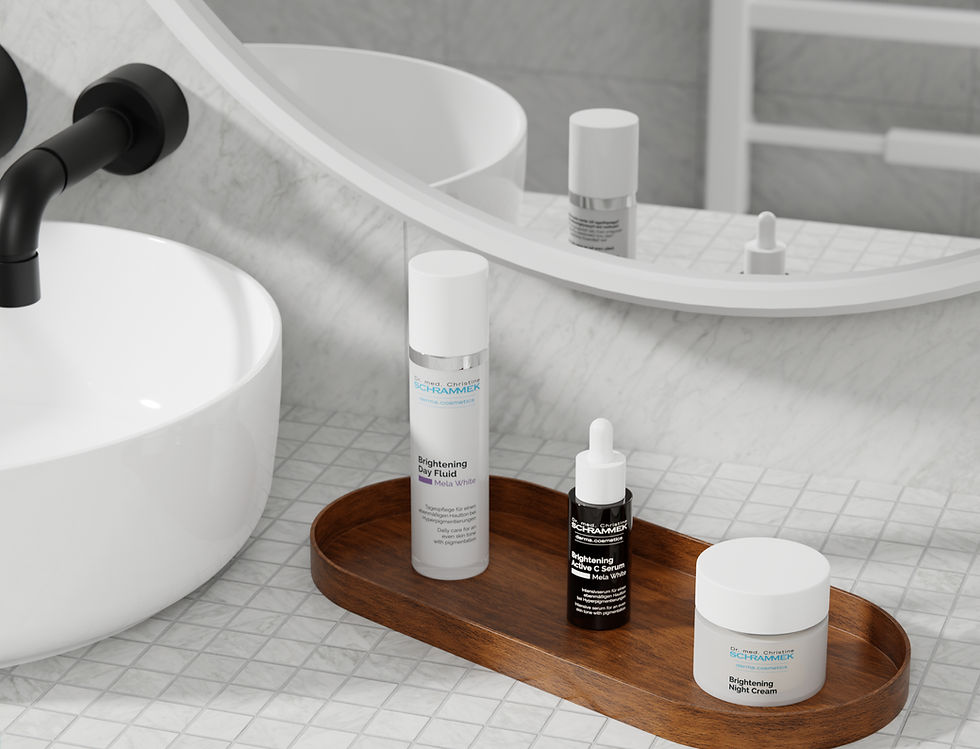
Support a brighter, more even-looking complexion with targeted Dr. med. Schrammek skincare.
For pigmentation-prone skin, a consistent routine should focus on targeted brightening ingredients, antioxidant protection, a healthy skin barrier and daily SPF 50+ protection.
SHOP MELA WHITE PRODUCTS →
SHOP SUN PROTECTION →


Comments